Office Time
Mon-Sat: 8am to 8pm


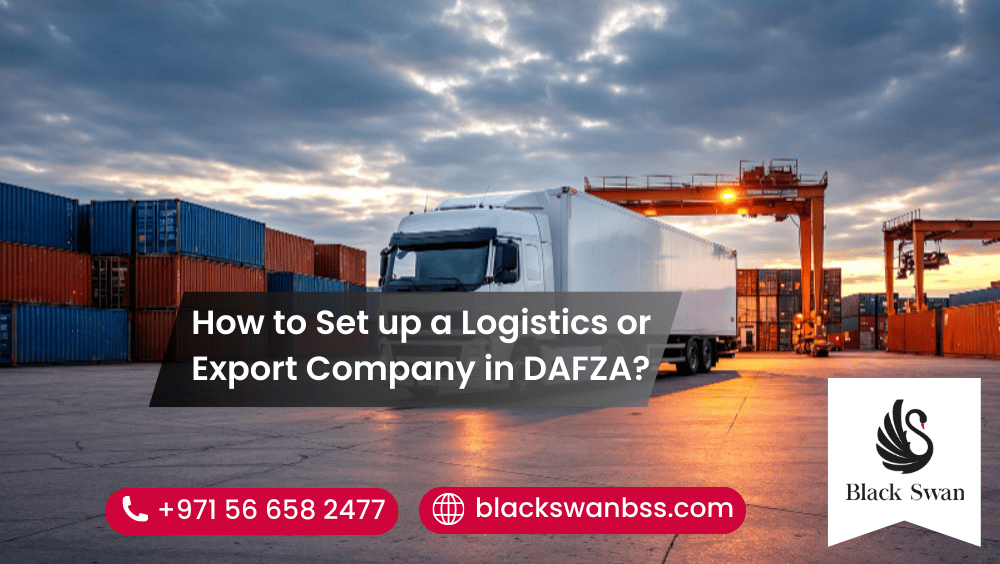
Dubai is meant for trade. And if your business depends on fast air connections, smooth customs flow, and premium infrastructure, Dubai Airport Freezone (DAFZA) is one of the most strategic places to start. It’s especially popular for logistics companies, import-export firms, and trading businesses because of its location next to Dubai International Airport and its business-friendly setup structure.
Table of Contents
It is straightforward in DAFZA. You must choose the license type. Trade License is the key one for export and trading. It covers trading activities like export, import, distribution, re-export and storage of specific products.
When your business is service focused such as consulting, freight forwarding services or support services, a Service License would fit better.
Typical activity mapping – example:
Practical tip: Many logistics businesses need a mix of trading, storage and distribution. The license selection must match the daily operations, not only your company name. Get details on Business Setup in Dubai.
DAFZA provides multiple company setup structures like:
The Freezone Company route is common for SMEs and new setups. DAFZA states a Freezone Company can be formed with 1–50 shareholders, and it notes a minimum share capital of AED 1.
Branch option is fine when you have an overseas company in UAE and need a DAFZA presence in the same parent brand.
DAFZA’s setup flow clearly highlights that you choose:
For a logistics/export business, “space” matters more than people think. Why? Because your license and visa quota often connect to facility type and size (and operational needs like storage, packing, dispatch, etc.).
Figure: Space choice logic
Documents can vary based on whether you’re opening a new free zone company or a branch, and based on your shareholders (individual vs corporate). In general, business setup documentation commonly includes shareholder/passport details and corporate documents for corporate shareholders (like incorporation papers and constitutional docs).
Basic checklist (typical):
Tip: For export/logistics, also prepare a clean product list (HS-code style thinking helps), supplier/buyer geography, and your handling method (air/sea/road + storage plan). It reduces back-and-forth. Obtaining an Import Export License in Dubai.
DAFZA itself markets the formation process as three simple steps: choose license, choose company type, choose space.
In real life, the practical flow often looks like this:
Export/logistics companies often need:
Your visa plan should match your headcount plan—otherwise you end up restructuring too soon. Get details on Visa Services in UAE.
For logistics/export businesses, banking and compliance is not “optional admin”—it’s your daily life. You’ll need smooth handling for:
Also, keep your company activities and actual invoicing aligned. Banks and auditors in UAE like clean, consistent paperwork (and it makes your life easier too).
Related Articles:
» How to get Logistics & Cargo License in Dubai?
» How to Register a Logistics Company in Dubai?
» Dubai South: A Strategic Location for Logistics Businesses
» Top Free Zones in Dubai for Company Incorporation
» Navigating Dubai’s Business Regulations
|
Stage |
What you do |
Output |
|
1 |
Pick license type (trade/service) |
Activity direction confirmed |
|
2 |
Pick company structure (Freezone company / branch) |
Legal form locked |
|
3 |
Choose facility/space |
Lease/space plan ready |
|
4 |
Submit docs + get approvals |
Registration progresses |
|
5 |
License issued + visas |
Operational readiness |
|
6 |
Bank + vendor onboarding |
Ready to trade/export |
DAFZA is Dubai Airport Freezone, often chosen for businesses that want strong connectivity and free zone setup. This suits trading and logistics oriented firms.
Yes. DAFZA’s Trade License covers trading activities including import, export, and re-export (and related distribution/storage of specified products).
If you trade goods, a Trade License may fit. If you provide services only, a Service License may fit.
DAFZA states a Freezone Company can be formed with 1–50 shareholders.
DAFZA’s process page notes a minimum share capital of AED 1 for a Freezone Company.
Yes. DAFZA lists a Branch option as a setup type.
DAFZA’s setup flow includes choosing your space as a key step, so yes—your facility choice is part of registration.
Requirements vary. But it includes identification documents.If corporate shareholders are involved then incorporation or constitutional documents.
Typically yes—after licensing, businesses proceed with immigration/visa steps based on their package and needs.
Timelines depend on activity approvals, documents, and space selection. A business setup consultant will estimate after reviewing your case.
DAFZA’s trade licensing description includes distribution and storage of specified products (subject to your chosen activity and facility).
We help you choose the right license or activity, prepare documents, coordinate approvals, arrange office/space, and support visas and banking workflow. So you don’t waste time in loops.
If you’ve spent the last decade skimming mainstream Western headlines, you likely view the Gulf…
Let’s be honest for a moment. Leaving a business behind is never easy. It’s usually…
When you plan to launch a business in the Sultanate, the first question would be:…
When you plan to launch a company in the Sultanate, one question arises: how much…
Running a company in Dubai feels fast—your market changes, your brand changes, and sometimes your…
If you want a premium Dubai free zone address, fast setup, and global credibility, DMCC…
If you are building a tech startup in the UAE, you will hear about Dubai…
If you want to sell your expertise such as business consulting, marketing consulting, IT consulting,…
Explore business opportunities with attractive packages for setting up of Business in Dubai, Abu Dhabi, Sharjah, RAK & Ajman
* T & C Apply
Low-cost Mainland company formation packages starting at great Offer. Incorporate business in Dubai, Abu Dhabi, Sharjah, RAK & Ajman
* T & C Apply
Start your business in the UAE Offshore get discount offer today On Dubai (JAFZA Offshore), RAK & Ajman Offshore !
* T & C Apply
Our connection with ministries and government bodies across the UAE help us obtain quick government approvals for our clients. Our consultants work closely with the Department of Economic Development (DED) and other government bodies in UAE to ensure the smooth and timely company formation


Setting up of business in UAE
Setting up of business in UAE
Get exact cost for setting up of business & company formation. Includes License Cost, Visa, Registration Fee, Office Cost, Consulting Fee etc
UAE: No: 3701. 3702 Citadel Tower Business Bay, Dubai
OMAN: No. 210, Beach Commercial Complex , Muscat
KSA: #184, HQ offices, Al-Wurud, Riyadh
UK: Bank House, 81, St. Jude's Rd, Egham, TW20 0DF
+971 56 658 2477 / +971 4 240 6939 (landline)
helpdesk@blackswanbss.com
Mon-Sat: 8am to 8pm
Get a customized quote as per your requirement & also get a free consultation with one of our experts.
UAE: No: 3701. 3702 Citadel Tower Business Bay, Dubai
OMAN: No. 210, Beach Commercial Complex , Muscat
KSA: #184, HQ offices, Al-Wurud, Riyadh
UK: Bank House, 81, St. Jude's Rd, Egham, TW20 0DF
+971 56 658 2477 / +971 4 240 6939 (landline)
helpdesk@blackswanbss.com
Mon-Sat: 8am to 8pm
Get a customized quote as per your requirement & also get a free consultation with one of our experts.

 ODR | Privacy Policy| T&C| Copyright| Cookies